


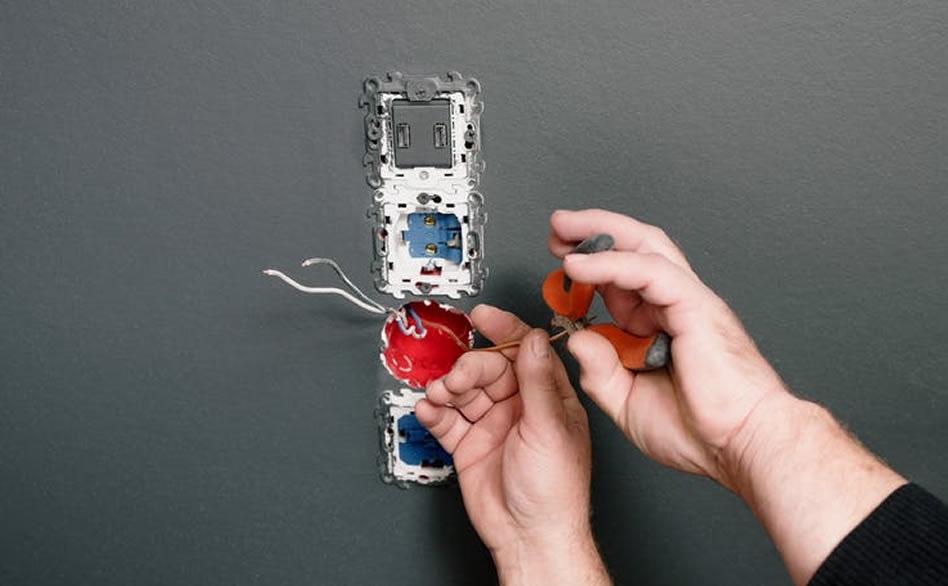
Keeping some key issues in mind can prevent electrification, fires and surges that affect the home, appliances and the safety of the home's inhabitants.
Voltage protection elements and correct electrical connections are some main allies for the home, which prevent the electrification of appliances and even fires and surges that may damage an appliance or the inhabitants of the home.1. Three legs are better than two
As of 2007, the commercialization of any other type of plugs, sockets and adapters that do not have three flat legs (positive, negative and ground) was forbidden in Argentina. According to this resolution, the third prong provides protection against possible failures in the insulation of the equipment and allows any electric shock to be grounded.
In the case of smaller appliances with plastic casing (printers, blenders, audio equipment), the standard establishes that they can have plugs with two inclined flat legs.
For this mechanism to work, at the time of construction it is essential to connect all the metal parts of an electrical installation (e.g. boards, boxes and outlets) to a yellow-green insulated electrolytic copper cable, which runs along the entire connection together with the power conductors and is firmly connected to a javelin buried in the ground. The purpose is to divert there any current leakage that makes any direct or indirect contact with electrified elements dangerous.
2. Wires are important
Just as the diameter of a pipe depends on the quantity of water passing through it, the diameter of an electrical conductor depends on the quantity of current flowing through it. This is generated by the friction of electrodes, which produces a certain temperature.
Cables withstand this heating up to a certain limit. Once this limit is exceeded, deterioration begins: the insulating materials melt and expose the copper wire, which can lead to short circuits and cause fires. For this reason, it is important that they are correctly dimensioned to withstand not only the current electrical load, but also the load required in the near future.
For home safety, make sure they are intact and in good condition; out of traffic areas; not installed under carpets or behind baseboards, as they require ventilation and can overheat and cause fires; prioritize the use of channel cable over exposed connections; and unplug appliances by the insulating body of the plug and never by the cable.
3. The more circuits, the better
A circuit is any conductor or system of conductors through which an electric current can flow. In the home, the standards prescribe the separation of at least two: lighting and sockets.
The first reason for this requirement is that one circuit should not be affected by the failure of another. The second is that separation aids the implementation of protective measures for the house.
In addition, a third circuit is recommended exclusively for high consumption appliances (electric stoves, air conditioners, etc.). In these cases, the conductors must be well dimensioned to ensure their correct operation.
4. Do not confuse fuses with thermal fuses or circuit breakers.
Nowadays, fuses are less and less used and are replaced by thermal switches, which fulfill the same function but without the need to change melted elements.
Circuit breakers detect earth leakage or insulation faults, whether caused by accidental contact by a person or by the malfunctioning of an appliance. Thermal circuit breakers, on the other hand, protect the cables of the installation against overloads and short circuits.
Therefore, it is important to understand that, while the thermal circuit breaker protects the installation, the circuit breaker protects equipment and people. There is a single instrument on the market that fulfills both functions at the same time, it is economical, and its use is recommended.
In conclusion, electrical safety inside homes depends on several factors. If the above recommendations are taken into account, the installation will be of high quality, will avoid wasting money and will minimize the risk of accidents. It is essential that the manipulation is carried out by trained and licensed personnel.