


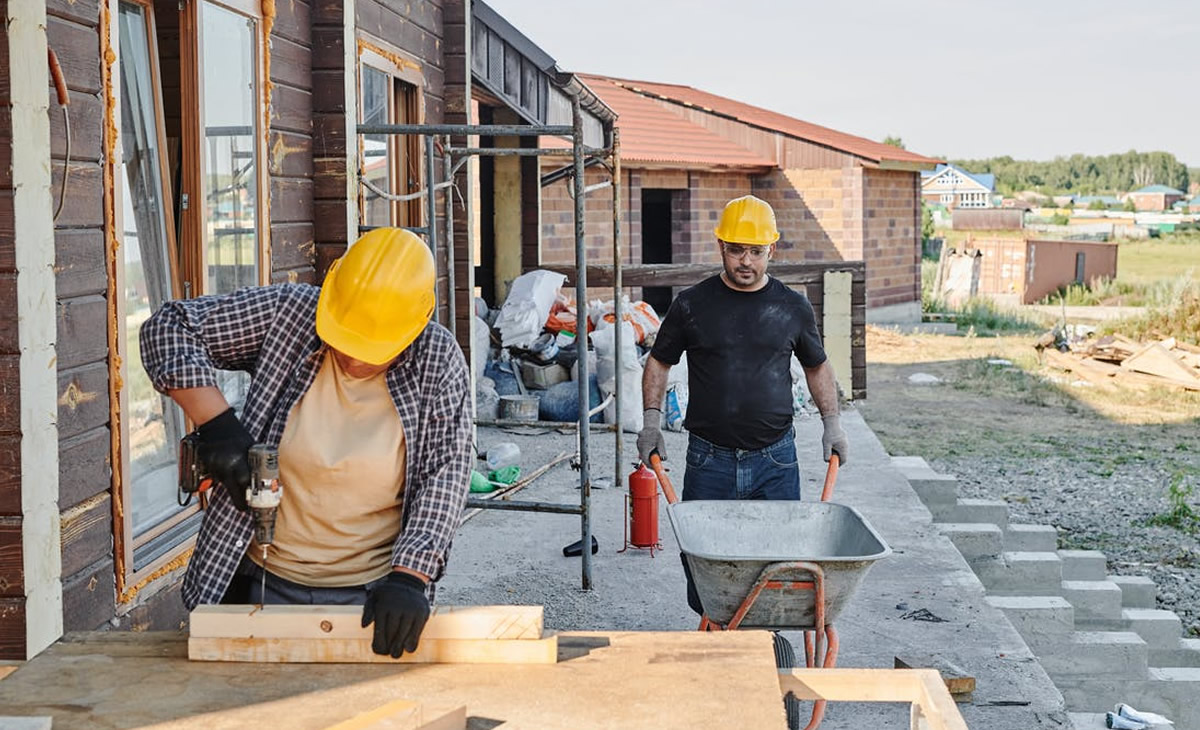
If you are one of those who can build the house of your dreams as you always imagined it, you must take into account certain aspects and know a little about the construction materials to be used. Not for aesthetic reasons, but rather for durability and usefulness.
What we usually see in construction materials are brick houses, although some buildings are solid thanks to concrete. On the other hand, more modern houses manage to complement bricks with wood, a material that some find unreliable. Neither option is better than the other, let nothing stop you from dreaming of making the house of your dreams come true.
How to choose building materials for our home?
Whether thinking about a home from scratch or some significant refurbishment, no one material is better than another. Both have their arguments for or against, and the choice depends purely and exclusively on what the builder and the client want. Both wood and bricks have the benefits of housing quality (i.e. that they can be properly lived in) and can also be shaped in a way that allows for effective energy savings. The position of the rooms or the home facing the sun, the type of neighborhood, and even whether it is a one- or two-story building are also key when thinking about the materials to use.
Wood: home feeling and energy saving
Those who are in favor of wood argue that this building material provides significant energy savings, as it manages to store CO2 from the atmosphere for a while. On the other hand, wood gives that feeling of comfort and home sought by those who build their homes. As for saving resources, it manages to keep the heat and cold of the place for longer, so in some cases, it saves more energy than it should. Less use is made of air conditioners or stoves, since everything stays there for a longer period of time.
On the other hand, those who are against this type of buildings emphasize humidity as the main enemy of wood. Although it can be avoided from the moment of construction (with insulators, paints or chemicals), it should be taken into account that in wooden houses there should be no recurrent contact with water, either through a pipe or by any other means. Others argue their low tolerance to climatic phenomena.
Today no one is exempt from torrential rains, endless storms and (in some provinces) tornadoes and high winds. A wooden house is much more exposed to these events. Finally, the acoustics of wooden houses are more vulnerable than others, so in case you want to isolate the noise either inside or outside, you should think of another type of tool to avoid them.
Brick: greater resistance and warmth of the home
If we talk about the low tolerance of wooden houses to climatic phenomena, brick houses are much more resistant, and it is very unlikely to end up collapsing before a hurricane wind or endless torrential rain. For those looking to save energy in winter, the brick house is ideal: during the day they conserve heat and at night, when the temperature tends to drop, they manage to condense and maintain the temperature thanks to what they have accumulated
However, for the summer band, the brick house can be a trap because it ends up being hot. The importance of having well-placed windows and making this home a well-ventilated place is one way to combat this trend. Just like brick homes, moisture does not escape brick homes.
In this case, moisture is the one that condenses in the environment so in the first years of use, perhaps a little more energy is consumed to combat it. Now with arguments for or against, do you already know how to build your new home?